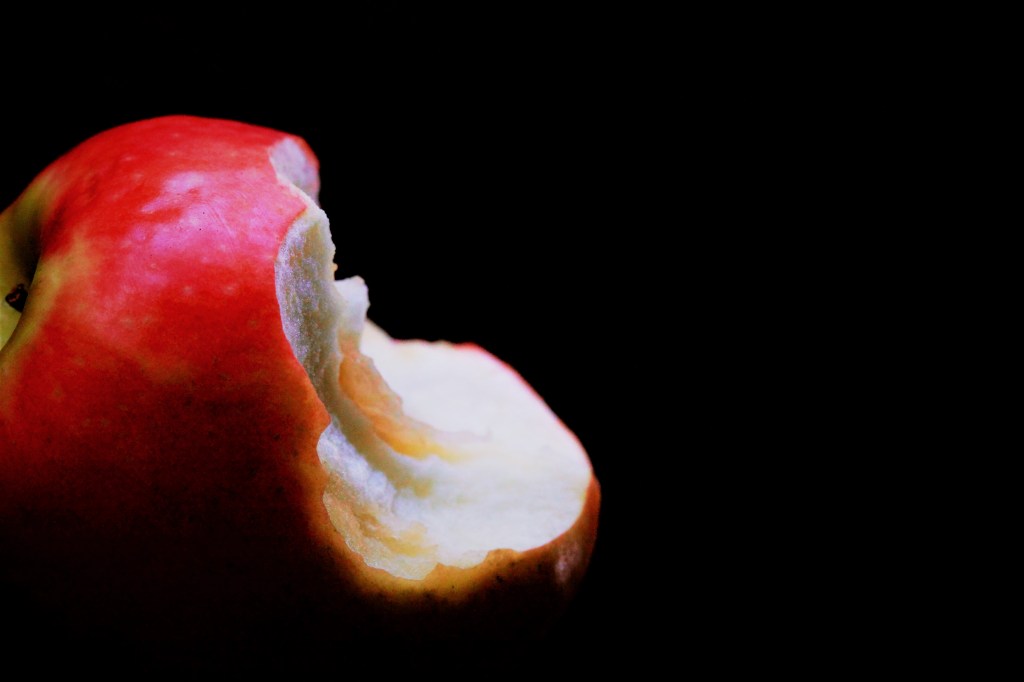
Salt in the Wound

In Genesis chapter 19, we see the two men that were with Abraham (spoiler alert: they are angels) go down to Sodom. Lot (Abraham’s nephew) sees the men and offers for them men to stay at his house. After some persuading, they agree. This is where things get crazy!

All the men of the town surround Lot’s house at night and demand that the new men staying with Lot come out so they can “have their way with them”. Lot tried to talk with the men surrounding the house so that they wouldn’t try to mess with the angels, he even offered up his two virgin daughters to the men in place of the angels (somehow that’s less messed up?). Those dudes weren’t having it though, especially from a foreigner like Lot, so they tried to attack Lot and break down the door to get to the angels. Before they could do that, the angels opened the door, snatched Lot and locked him in the house, then blinded all the men that were trying to attack them.

After that, the angels tell Lot to take all of his family and get out of the city, because stuff’s about to get real! God sent the angels to destroy the city because the place is too evil to exist. Lot told his son-in-laws what was up and they thought he was joking, so they didn’t move. The angels said “forget them, Lot you and your wife and daughters need to go now.” Lot was still lollygagging (not rushing, clearly not motivated by the impending doom) so the angels grabbed him by the arm and took him and his wife and daughters outside of the city so they wouldn’t go down in the destruction. The angels told them to escape to the hills and don’t stop or look back.

Lot was freaked out and didn’t think he could make it to the hills, so he asked the angels if he could run to a small town in the middle of nowhere that was closer instead. The angels agreed, but told him to hurry because they couldn’t start destroying things until he was safe.

When the sun rose in the morning, Lot and his family arrived at Zoar ( the small town). When they arrived, God sent a rain of fire down on Sodom and Gomorrah and all the cities of the valley, destroying them. Lot’s wife decided to look back on the place they had escaped (despite the angels’ instructions) and was turned into a pillar of salt.

Abraham woke up and saw all the fire and smoke from his house and thought of Lot and God’s promise to rescue him.

Eventually Lot left Zoar with his two daughters and moved into a cave in the hills (the hills that he told the angels he didn’t want to live in). Lot was getting pretty old and his daughters were getting older too. The daughters felt their biological clocks ticking and since God had wiped out all of them men in the land, they came up with a plan to get their father drunk and sleep with him. Both daughters became pregnant, the older one with a son named Moab and the younger one with a son named Ben-Ammi. This is where the Moabites and the Ammonites came from.

There is A LOT that went on in this chapter. Firstly though, if some dudes show up at your house and blind a whole bunch of people, then tell you to leave your house before you get destroyed with everyone else, maybe listen to them. Secondly, if you do evil stuff you’re going to get destroyed – so maybe don’t do evil stuff? Third, rules are in place for a reason. If someone says, hey don’t do this or you will die, don’t be surprised if there are some massive consequences when you do the thing you weren’t supposed to do. And lastly, if you raise your kids around a whole bunch of crazy, don’t be surprised when they act crazy.

I think the main point of this chapter is to show two things. 1) that God keeps his word. He spared Lot’s life like He said He would and He destroyed Sodom and Gomorrah like He said He would. Everything He said He would do He did, so I think it’s safe to say that if He says He’s going to do something, He will. 2) actions have consequences. Being evil will consume you and get you destroyed. Being good could spare your life. And following directions will get you to safety.

God destroys the wicked places in our life for a reason. Sometimes we live somewhere (physically or metaphorically) that we are not meant to live in. Even though we may be a light in the dark place, if we weren’t assigned to be there, aren’t spreading our light (standing up to darkness) or if we are not connected to a source of light ourselves, we may be tempted to pick up some of the dark thought processes (ie offering the wicked men your daughters). When God destroys a place, he doesn’t want us to stop moving forward to our next place or to look back on the old place. He moved us out of there for a reason. He spared our life, so keep your eyes on the prize!

Be encouraged that He kept you from the destruction. You may not see the smoke or pillars of fire and He may have had to send angels to pull you out of there kicking and screaming, but the people who care for you (the Abrahams in your life who prayed that you would be spared) can see all of the smoke and know that you are safe.

Pregnant with Doubt

In Genesis chapter 16, we find Abram and Sarai’s hope fading once again about ever having a child. We are reminded once again that Sarai has bore Abram no children and in this time of waiting for a promise that never seems to come true, Sarai gets the idea that she and Abram can still have a child if Abram sleeps with her handmaid Hagar. Sarai tells this to Abram and he listens to her – he goes along with this plan. It doesn’t say that Abram protested, expressed any opinions, struggled, nothing. It just says that Abram listened to his wife.

So Abram goes and sleeps with this other girl and gets her pregnant. Once his wife Sarai notices that Hagar is pregnant (which must have taken some time, it couldn’t have been immediate) she also noticed a change in Hagar. Hagar started looking down on Sarai and treating her poorly. Hagar was disrespecting the chain of command and that made Sarai angry.

Sarai went to Abram and told him how she felt and Abram was like “look this is your servant, handle it” so Sarai was SO mean to Hagar that Hagar ran away.

Upset, pregnant, probably lacking resources and scared, Hagar went off into the wilderness. An angel came to the wilderness looking for Hagar and began to talk to her about her situation. The angel asked her a very important question, ” where are you coming from and where are you going?” Once the angel heard her out, Hagar was given a blessing saying that she would have a multitude of offspring, but that her son would be a wild and crazy guy. The angel told Hagar to name her son Ishmael which means God hears. Then the angel instructed Hagar to go back to Sarai and submit to her.

Hagar called that place in the wilderness Beer-lahai-roi, meaning the well of the God who sees me, because God saw her in her place of affliction. She went back to Abram and Sarai and gave birth to Ishmael when Abram was 86 years old.

For me, this story touches a place deep in my soul. That place that is waiting for a promise that doesn’t seem to come. The promise that keeps getting told to me, the one I have heard many times and am waiting in anticipation, but I see nothing in my life that points to this promise coming true. Like Abram and Sarai, I have my doubts and sometimes I come up with my own plans to “help” God with His promise, but that never seems to work out. The amazing thing is that the promise is still a promise. God’s word for my life doesn’t change just because I can’t be patient. Abram and Sarai didn’t lose out on their promise just because they tried to figure out their own way of doing things, they just had some added complications to their blessing.

I also greatly appreciate how God dealt with Hagar. She wasn’t trying to mess up anyone’s blessings, but when she got blessed when someone else didn’t, she got a little arrogant. She treated someone she served poorly because she thought she was better than her. That led to some consequences and Sarai treated her poorly as a result. I don’t know what kind of relationship they had before, but even if it was just cordial and professional, that relationship was now broken and both sides were hurt.

Being extremely hurt, Hagar ran away, but God met her in that broken and lonely place and sent someone to talk with and listen to her. I love the question that the angel asks, “where have you come from and where are you going?” It’s a great self reflection question about where we’re at and what led us to get to this place and how are we going to get out of it. A lot of times brokenness, anger, mistakes and sin have caused us to run away to the wilderness, but God sees us and meets us in these lonely places. He will even bless us in our mess, but then He instructs us to turn back to that broken place and return with a different attitude.

Now I imagine that it was extremely hard for Hagar to go back to a broken relationship and submit. I bet it was extremely hard to go back to someone who treated her so harshly and stay in that place and not have content in her heart. I bet it was equally hard for Sarai to accept Hagar back into her presence after she treated her poorly and then seeing Hagar run away, but that’s the beauty of God. He calls us back to the broken places so the His glory can shine.

Now the text doesn’t say that Sarai welcomed Hagar back with open arms, but it also doesn’t say she backhanded her upon arrival. I imagine there was some awkwardness as they both tried to navigate the broken relationship, but I love that God sent Hagar back for the chance to make things right.

Be encouraged, God is the God who sees us. He will keep His promises to us and even if we mess up along the way, he will give us another chance to make things right. He is the God of many chances, so even if you are currently in the wilderness, if you were hurt, if you did the hurting, if you have doubt, if you messed up something so bad that you don’t think it can ever be fixed, know that God hears you and he will give you another chance to go back and try again.

Rainbow Promise and a Not So Different Land

In Genesis chapter 9, we see that Noah and his family have left the ark and God has blessed them and told them to go forth and multiply, just as He told Adam and Eve in the garden. The Earth had been wiped clean of all humanity and it was Noah’s sons who were to repopulate. In addition to this, God commands mankind to look after the Earth, all the animals, He allows them to eat the animals now as long as they drain the blood from the animals (no drinking blood and do not torture the animals, kill them humanely), and lastly God says that anyone who murders someone is to be killed. He ends His instructions by retelling Noah and his family to be fruitful and multiply.

After He gives instructions, God makes a promise that he will never take out the whole Earth again by a flood. To show a sign of his promise, He put a rainbow in the sky. What comfort that must have been to these lone survivors of the great flood. I wonder how many times they saw rain and though the flood might happen again, but then saw the rainbow and were relieved by God’s promise.

As with most things in life, after an amazing life changing moment or a great travesty, life went back to normal and people reverted back to known behaviors. Noah planted a vineyard and got drunk. It doesn’t say why this happened or how Noah was feeling or what led him to this, it just says that he got drunk and laid uncovered (naked) in his tent. This was not how a great man, the only man who found favor with God in wicked times, was supposed to act. He was supposed to be great all the time, and yet we see his humanness. We see him act differently than we expect. Despite the excuse or the reason, we only see the action.

Now does this mean that God took away His promise from Noah or that He was mad and punished Noah? No, in fact the text doesn’t make any mention to God’s feelings on this situation. Additionally, we still see rainbows in the sky to this day and are reminded of God’s promise. What we do see are consequences and an aftermath that happens as a result of Noah’s actions though.

We are told that Noah’s youngest son sees his nakedness and tells his brothers. The brothers cover their father with a garment and never see the nakedness of their father. After Noah wakes up, he learns what happened and curses (Noah curses, not God) his youngest son for what he did.

Now there is a lot of speculation on what actually happened and why it was so bad. Here’s what I know. Noah’s youngest son saw something and did nothing about it except to tell others. The older boys covered their father and didn’t look. It could be as simple as that. Nakedness implies a level of vulnerability and especially if Noah was in a drunken state, he was not himself and was probably even more vulnerable than normal. The youngest son did not protect this vulnerability, but the older ones did without asking for specifics or digging into the matter. They did not need to see what state their father was in, they just covered him.

That is what family is supposed to do. When you are at your lowest point, when you have misstepped, when you have found yourself in a vulnerable place, family is there to cover you no questions asked. Family might mean different things to everyone. It could be your family of origin, your close friends, or other believers, but family are those you are familiar with that surround you. They won’t be perfect all the time, but they will cover you and you need to cover them too.

Be encouraged, we have all survived the floods of life, we see the rainbow promise in the sky that God won’t wipe out His creation, and your family (even the family you have in believers just reading this post) will cover you and pray for you. You were made in God’s image and are fearfully and wonderfully made and there is nothing you can do to make God forget His promise or His people. Be blessed.

Temptation & Suffering

Genesis chapter three opens by introducing us to a new character, the Serpent. The text tells us that the Serpent was more crafty or subtle than any of the other creatures. Just like with any good story, this is a set up to introduce us to the antagonist. And the antagonist is almost always a snake!

The first thing this snake does is go up to a woman and make her doubt what she knew to be true. He asked, “Yea, hath God said, Ye shall not eat of every tree of the garden?” Basically, did God say you can’t eat anything in the garden? The answer is no, that’s not what God said. God gave a very specific qualification that humans could eat of any tree except the tree of knowledge of Good and Evil. If we look back in chapter two of Genesis, we will notice that God gave this directive to man before woman was created, so man had to have told woman at some point because she responds to the Serpent by saying that they can’t eat or touch the fruit or else they will die. Now that’s not exactly what God said, he said they couldn’t eat the fruit, but he didn’t say anything about not touching it, so there’s already a misunderstanding of the word of God.

So the Serpent continues with his mind games and tells the woman that she’ll be like God if she eats the fruit and of course she won’t die. So she looked at the tree (don’t our eyes always get us into trouble?) and liked what she saw, so she ate the fruit and then shared some with her husband. Sharing is caring!!

The sneaky sneaky snake cornered this poor woman to spew his lies. My question is, where was the man in all of this? His woman was talking to a snake and he doesn’t pop up on the scene until she offers him some food? Really. After that, the Serpent pretty much flees the scene and leaves the man and woman to figure out life themselves. He just sort of showed up to cause trouble and then dipped out.

Once the man and woman ate of the fruit, they realized that they were naked so they tried to cover up with some fig leaves. Back in chapter two, they were naked and unashamed, so now they’re clothed and ashamed. Something is wrong here.

The next thing that happens is that God shows up on the scene. He strolls through the garden in the cool of the day and the man and woman hide from him because they know they messed up. And God, already knowing what went down called to them to see how they would react. Immediately, everyone starts playing the blame game. The woman blames the Serpent, the man blames the woman and God (“The woman whom thou gavest to be with me, she gave me of the tree, and I did eat”), I imagine the Serpent is looking around like “Who me?” Shame will do that to you, make you afraid, make you hide, make you play the blame game.

The thing that gets me is that NOBODY took responsibility for what went down. NOBODY said, hey yeah actually it was me, I messed up. NOBODY stood up for anyone else. NOBODY owned what they did. They all just pointed fingers. And that led to God punishing them all.

To the Serpent, He cursed him to crawl on the Earth and be trampled on by man. To the woman, He increased (multiplied) her pain in childbirth and made her desires about her husband. And to the man, He cursed the ground that man is to work on, telling him he will need to sweat (work hard) to eat and that he was born from nothing (dust) and will die and be nothing (dust).

After this, God shows compassion for the humans. He clothes them in animal skin. That must have been a lot more comfortable that fig leaves. After the humans had some comfort, God enforced the last consequence to their actions. He kicked them out of the garden and placed an angel with a flaming sword there to stand guard so they couldn’t return. Man and woman, now named Adam and Eve, had to make their home else where. And for anyone who has ever moved to a new city, it is hard to leave the place you loved for the unknown.

The thing about temptation is it will develop you or destroy you.

Your character is made through trials and how you learn to (or not to) handle them. Some choices that I have made in life have caused me to absolutely crumble, but the lessons I have learned from those moments have been tattooed on my heart. In life, we can either own up to the choices we have made and deal with the suffering head on, or we can play the blame game and see how far that takes us. Regardless, we are not perfect and will mess up along the way just like the first humans.

Be encouraged though! God shows us in this first temptation in Scripture that although there are consequences to our disobedience, we can still live, we can be happy and we can still talk with God. All is not lost. Life goes on.